

JOB INTERVIEW STRATEGIES
An interview is your chance to show the employer that you are sincere, responsible, and a good fit for the job. It’s not just about answering questions; it’s also about demonstrating your attitude, preparation, and confidence in a respectful manner.
1) Reconfirm the appointment
Before the interview, always reconfirm the appointment. This shows the employer that you are serious and respectful of their time. It also helps prevent misunderstandings and last-minute confusion.
If you have a lot of appointments, be careful not to overbook yourself. In Hong Kong, if you only have Sundays off, plan your schedule wisely. Take travel time between locations into account so you won’t arrive late or be too tired.
If you need to cancel, always let the employer know at least one day in advance. Don’t just disappear or ignore the appointment, because that makes a very bad impression.
2) Be clean and tidy
On the day of the interview, dress neatly and keep your appearance simple. You don't need heavy makeup or very fancy clothes. A clean, neat, and natural look is often best.
Your goal is to look presentable, practical, and professional. Employers usually notice whether you take good care of yourself, because this can also reflect how you might work in their home.
3) Maintain good eye contact and smile
Good eye contact and a polite smile can make a strong first impression. It shows confidence, honesty, and friendliness. You don't need to force yourself—just be natural and respectful.
A warm expression helps the employer feel at ease when talking to you. Sometimes your attitude speaks louder than your words.
4) Prepare your self-introduction
You should be prepared to introduce yourself properly. Practice a short introduction that covers:
- your name.
- your previous work experience.
- your skills.
- your personality and character.
For example, you can mention if you are patient, hardworking, honest, or good with children. Keep your answer clear and simple. Don’t exaggerate, because employers often value honesty more than big promises.
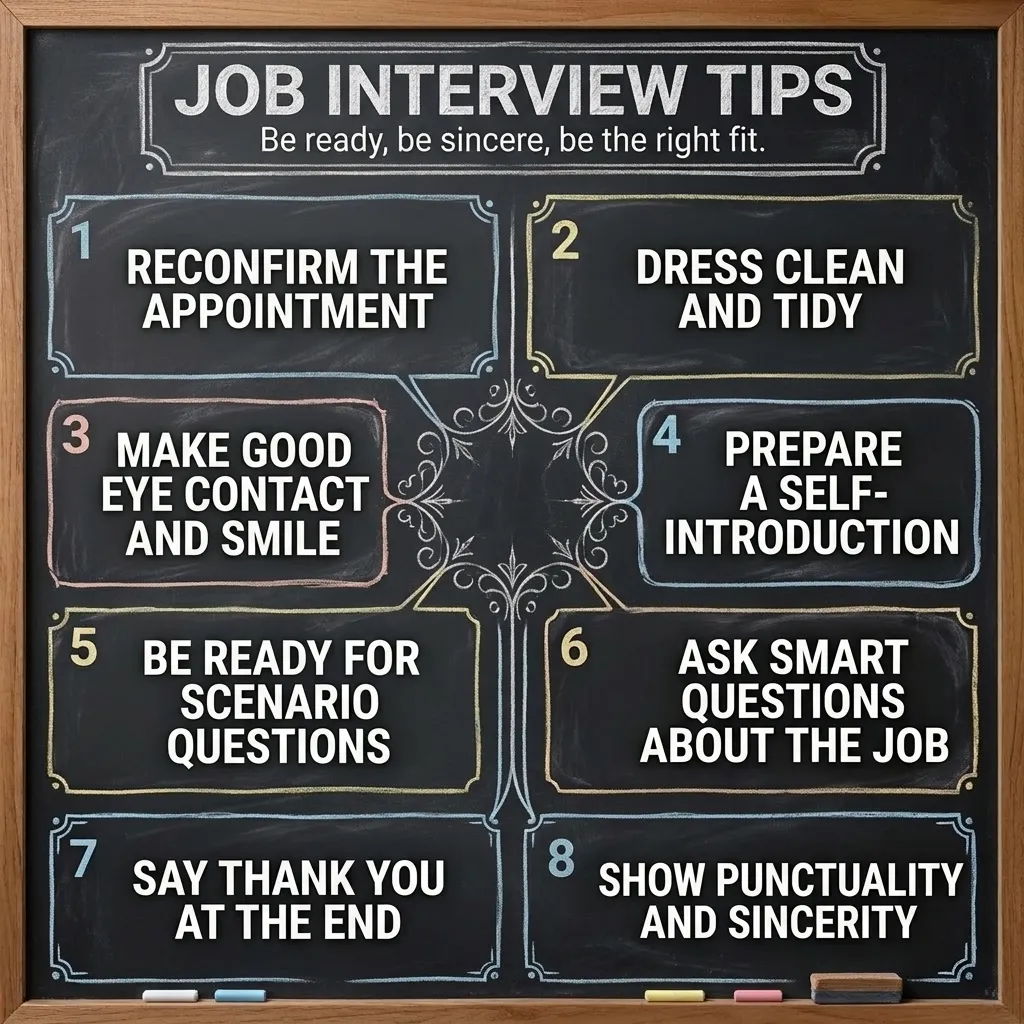
5) Be prepared for scenario-based questions
Employers may ask scenario-based questions to understand how you think and how you handle problems. For example, they may ask what you would do if a child were crying, if an elderly person refused to take their medication, or if you were asked to manage multiple tasks at the same time.
The best way to prepare is to think calmly and answer in a practical way. Show that you can stay calm, follow instructions, and solve problems responsibly.
6) Ask the right questions
It’s a good idea to ask questions about the job, because it shows that you’re thinking carefully. You might ask about:
- work duties.
- the coworker.
- the place where you will work.
- the person you will be taking care of.
But don't ask too many questions. Strike a balance. You want to show interest, not make the interview feel complicated. Ask only what's necessary so you can clearly understand the job.
7) Say thank you
At the end of the interview, always thank the employer for their time. This is a simple habit, but it leaves a good impression. Expressing gratitude demonstrates good manners and professionalism.
A polite thank-you message can also help the employer remember you favorably after the interview is over.
8) Tips for Video Interviews
For video interviews, it’s very important to be well prepared. Make sure your internet connection, camera, and microphone are working properly before the call. Choose a quiet place with enough light so the employer can see and hear you clearly.
Dress neatly, just as you would for an in-person interview. Hold your phone steady, sit up straight, and avoid any distractions in the background. Speak clearly, look at the camera, and stay calm.
If there is a delay, notify the employer immediately. Being punctual and prepared is even more important in a video interview because first impressions still matter a great deal.
9) Tips for In-Person Interviews
For an in-person interview, arrive early and plan your route carefully. In Hong Kong, travel time can be long depending on the location, so don’t schedule too many appointments in a single day. If you only have Sunday off, choose wisely and keep the number of interviews manageable.
Bring what you need, and be mentally prepared to meet the employer face to face. During the interview, be polite, listen carefully, and answer with confidence. Your body language, tone, and attitude all matter.
10) Show that you are the right fit
Ultimately, the employer wants to see if you are punctual, sincere, and a good fit for the job. Try to show that you are responsible, respectful, and eager to learn. These qualities can make a stronger impression than just saying the right things.
A good interview isn't about pretending to be someone else. It's about showcasing your true strengths in the best possible way.
Final Thoughts
Preparing for an interview is important because it helps you feel calm and confident. When you are well-groomed, sincere, punctual, and prepared, you are more likely to make a good impression.
Remember: confirm your appointment, arrive on time, prepare your answers, ask thoughtful questions, and always be respectful. A good interview starts with good preparation.
FAQ
1. Should I ask a lot of questions during the interview?
No. It’s good to ask a few important questions, but not too many. Ask only what helps you understand the job clearly.
2. What if I need to cancel an appointment?
Always notify your employer at least one day in advance. Do not just disappear or fail to show up without letting them know.
3. What should I wear to the interview?
Wear something clean, neat, and simple. Avoid heavy makeup and overly dressy clothes.
4. How can I prepare for video interviews?
Check your internet connection, camera, microphone, lighting, and background before the call. Dress appropriately and speak clearly.