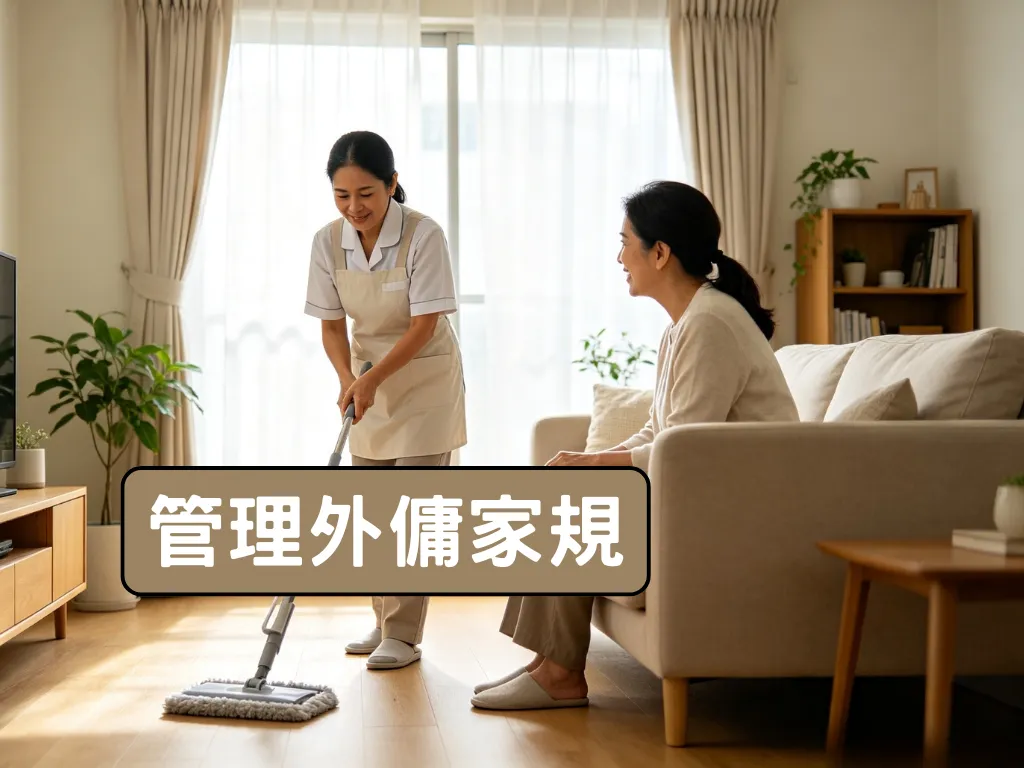
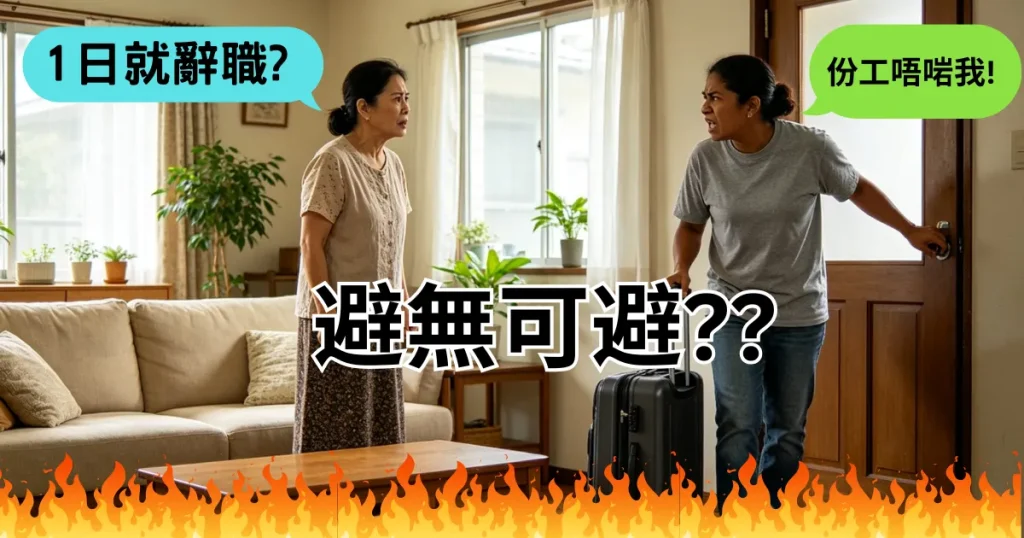
On the “Looking Around” forum, an employer shared that their newly hired domestic helper requested to terminate the contract just two days after arriving in Hong Kong to start work, resulting in a loss of nearly 20,000 yuan. The story was immediately widely reposted on major discussion forums and by the media, causing concern among many employers: “Is it risky to hire someone these days??」
Cases like these can certainly cause anxiety for employers, waste their time and money, and leave them feeling disappointed—making it very difficult to feel confident about hiring the next foreign domestic helper. HelperLibrary aims to help everyone understand and analyze the system and the actual risks involved, so that employers and foreign domestic helpers can work together in a safer and more stable manner.
"Bad news travels fast, but good news goes unnoticed."
There’s a saying in Hong Kong: “Bad news travels a thousand miles, but good news goes unnoticed”—and this is particularly evident when it comes to the issue of foreign domestic workers: social media and news outlets tend to focus on cases involving disappearances, job-hopping, and extreme conflicts, while long-standing, stable, and mutually respectful relationships between employers and foreign domestic workers never make the headlines. It is often this kind of negative news that causes all employers to lose confidence and, in turn, panic.
Many commentators and advocates have pointed out that there are more than 300,000 foreign domestic workers in Hong Kong who care for the elderly and children and handle household chores every day, making a significant contribution to the city’s operations and economy—yet these “good deeds” rarely go viral online.
So, when we hear stories about domestic workers “leaving after just one day,” we need to remember: these are rare exceptions among many stories; they don’t represent all domestic workers, nor do they represent all employers. Honestly, there’s no foolproof way to prevent this from happening. Domestic workers truly help employers make the most of their time. If you’re worried but still plan to hire one, do your best to find ways to minimize the risks,
The Real Pressures Facing Employers: High Costs, Significant Risks—Their Perspective Deserves Understanding
First, let’s look at it from the employer’s perspective: Hiring a foreign domestic worker typically involves significant costs, including agency fees, medical examinations, training, visas, insurance, and airfare—which often add up to more than 10,000 or even close to 20,000. On top of that, there are monthly wages, daily meals, and living expenses.
If a foreign domestic worker terminates the contract early (for example, just a few days or weeks after starting work), it’s difficult to recoup these upfront costs in full. Coupled with the sudden lack of help with daily household chores, the stress and sense of loss are immense—and the employer’s feelings are certainly understandable. It’s only natural to feel angry and lose confidence.
The Reality of Foreign Domestic Workers: They Come for the Families, but the System Also Deterrents Them from Quitting on a Whim
At the same time, we must also consider the perspective of foreign domestic workers. Many studies and commentaries have pointed out that most foreign domestic workers come to Hong Kong to improve their families’ lives, pay for their children’s education, or repay debts in their home countries; a stable job in Hong Kong is therefore extremely important to them and their families.
Under the government’s “two-week rule” and the arrangements of the Immigration Department, foreign domestic helpers who terminate their contracts early are generally required to leave Hong Kong within 14 days. The Immigration Department also records each instance of early contract termination and, when approving new visas, considers whether the early termination was abused for “job-hopping” . Applications involving multiple contract terminations within a short period may be subject to stricter scrutiny or even rejection.
In other words, for foreign domestic workers, quitting a job on a whim is not simply “switching jobs easily”; rather, it could affect their chances of returning to work in Hong Kong in the future. This is the systemic risk and opportunity cost they must bear.
"You don't have to pay foreign domestic workers at all"? In fact, most of them contribute in their own way.
In recent years, there has been a claim that foreign domestic workers coming to Hong Kong to work “don’t have to pay any fees at all,” and that since all expenses are covered by the employer or the agency, they can easily switch jobs or resign. From the employer’s perspective, it is true that many Hong Kong employment agencies offer “one-stop services,” including local or overseas medical examinations, language and housekeeping training, visa fees, airfare, and insurance, with the costs primarily charged to the employer.
However, in their countries of origin—such as Indonesia and the Philippines—domestic workers are often still required, depending on the arrangements made by their agencies or schools, to pay a portion of the training or basic medical examination fees to local training centers or medical institutions. The amounts vary by country and institution, and for these workers, this represents a significant financial investment.
Some of the older sisters didn't think it through, soSay yes!
Sometimes, due to a desperate need to find work, significant financial pressure at home, or a lack of understanding of the actual working conditions in Hong Kong, foreign domestic workers may quickly accept a new job during an interview without having enough time to think it through; Once they actually start working, they may discover that the job duties, the family atmosphere, or the living arrangements differ from what they had imagined. They may feel regret as early as the first day and even begin to consider terminating their contract early.
What Employers Can Do: Reduce Risks for Both Parties Starting with the Matching Process
1. Try to match the domestic helper’s past experience with your family’s specific needs.
If a foreign domestic worker previously spent most of her time caring for an elderly person in stable health—a role with a relatively calm pace—and you now ask her to care for two active young children while collaborating with another caregiver, the level of stress and the nature of her daily interactions will be completely different. It is crucial to discuss whether her prior experience aligns with these new responsibilities.
Employers should therefore be more proactive during the interview stage and ask a few more questions: clearly explain the family background and specific job duties; inquire about why the domestic helper’s previous contracts ended, who she actually cared for, and what concerns she has about the new job; and assess, based on her resume and answers, whether there is a risk that she might “struggle to adapt quickly.” This approach not only reduces the likelihood that the domestic worker will later regret the mismatch but also protects the employer by avoiding unnecessary hiring costs and emotional stress. Have a genuine discussion about whether she believes she can adapt to the role long-term, rather than simply accepting a vague “yes.”
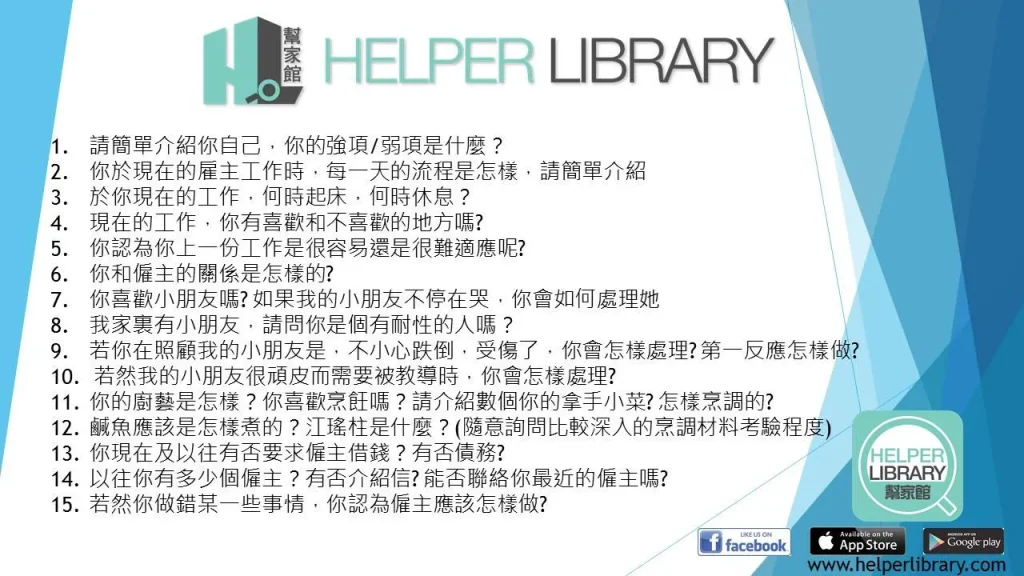
2. Hiring a Foreign Domestic WorkerinterviewAt this time, make good use of “home visits” to help her experience the real-life environment.
Many situations where employers “realize they aren’t a good fit only after the helper moves in” can actually be reduced through home visits and early communication. For domestic helpers who are already in Hong Kong, invite them to visit your home first before deciding whether to sign a contract.
During a home visit, you can have her:
- See your own room and relaxation area, and experience the privacy and comfort;
- Whether there are pets in the household, the ages of any children, and whether the candidate will need to live with or work alongside other staff members;
- Get a firsthand feel for the family atmosphere and be honest about whether you think you’d be a good fit for living together long-term.
When hiring a nanny from overseas, you can follow the same process as above, but use video calls to help the nanny get a sense of your actual home environment.
3. In-depth interviews and review of past contracts and letters of recommendation
When interviewing at HelperLibrary, we recommend that employers:
- Don’t limit yourself to just a few standard questions; ask more open-ended questions to encourage the domestic worker to describe their past work experiences and feelings. For example, “What did your last employer appreciate most about you?” or “What part did you find most challenging?”
- Check to see if she has had multiple very short-term contracts in the past. If so, you can gently ask her why and listen carefully to her explanation.
- Whenever possible, with the domestic worker’s consent, review letters of recommendation from previous employers or contact them through legitimate channels to learn about the worker’s actual performance; this is also one of the steps the government recommends employers take.
These actions aren't about "looking for evidence" to cast doubt on her, but rather about gaining a more comprehensive understanding to reduce future misunderstandings between the two parties.
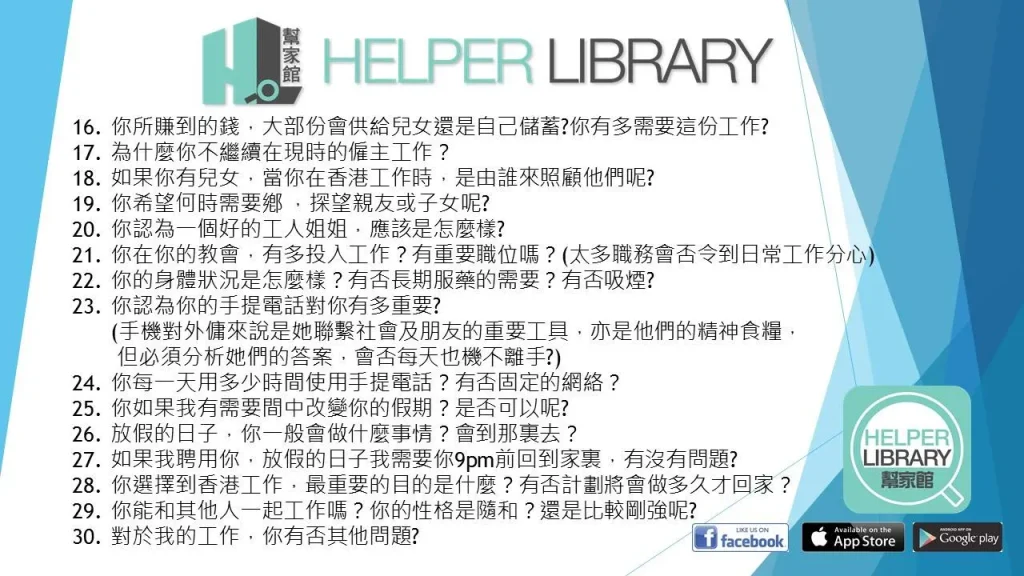
4. Consider "Direct Hire," which is more affordable but better suited to understanding people"Mode"
If hiring a foreign domestic worker is very costly, and the system cannot guarantee that 100% is risk-free, employers may want to consider the more affordable “direct hire” option, selecting a domestic worker from the platform and getting to know them through direct, in-depth conversations, multiple rounds of interviews, and online interactions. The advantage of this model is that employers can communicate directly with the domestic helper via WhatsApp or phone before signing the contract. By personally arranging in-person interviews, they can build deeper mutual trust and understanding, while the helper also has the opportunity to better understand your family’s culture and expectations—helping to reduce situations where you only realize the match isn’t right after the helper has moved in. Once you’ve selected the right candidate, you’ll work with an agency to finalize the Direct Hire contract. Since employers are responsible for arranging the interviews themselves, this option costs one-third less than traditional agency fees. Of course, this doesn’t provide a 100% guarantee that the domestic helper won’t resign suddenly, but it does help minimize the financial impact.
I hope this article will be helpful to everyone.Reducing Fears About Hiring Foreign Domestic Workers,Please note that every job comes with its own risks.,I hope everyone will put in a little more effort and do a little more preparation before hiring,This will help ensure that the working relationship between employers and foreign domestic workers is more enduring and based on mutual respect.