
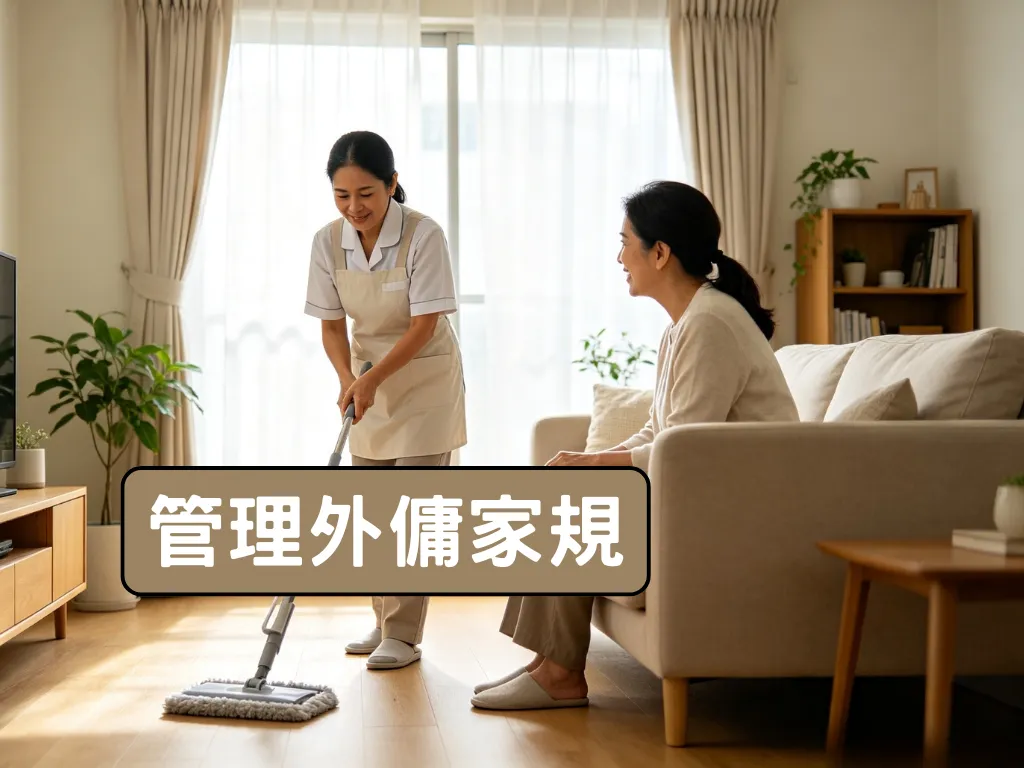
Is there a misunderstanding over expectations or a dispute over cell phone use with your domestic worker? This article teaches Hong Kong employers how to establish clear house rules, improve communication, and reduce daily friction to build a more stable employer-employee relationship.
Do Your Female Employees Always Say, “I Don’t Understand What You Want”? House Rules and Communication Skills Every Hong Kong Employer Must Learn
For many Hong Kong employers, the biggest frustration after hiring a domestic helper isn’t the helper’s poor attitude, but the fact that they seem to be “talking at cross-purposes” every day. Even when things have already been discussed—such as kitchen cleaning standards, pickup and drop-off times, or cell phone usage habits—the same issues resurface just a few days later. Over time, employers feel the domestic workers aren’t putting in enough effort, while the domestic workers feel they’re already trying their best, leading to mounting stress on both sides.
In fact, many conflicts don’t stem from malice, but rather from vague instructions, cultural differences, and differing interpretations of “common sense” between the parties involved. Rather than simply assigning blame, it’s better to establish a set of clear, actionable, and enforceable household rules and communication methods.
Why doesn't "having said it" mean "having explained it clearly"?
With the fast pace of family life in Hong Kong, many employers give a few quick instructions in the morning before rushing out the door, assuming the other person will understand. But for domestic workers, if the instructions involve language, sequence, timing, and standards all at once, they may not be able to take it all in at once. This is especially true for foreign domestic workers who have just arrived in Hong Kong; they are more likely to remember only part of the instructions due to nervousness.
For example, the phrase “Please tidy up the room” can be interpreted in completely different ways by different people. Some might think it simply means making the bed, while others might also tidy up the floor, the area around the windows, and the toys. If the employer doesn’t provide specific instructions, it’s actually quite common for misunderstandings to arise later on.
How Should Effective House Rules Be Established?
Truly effective household rules aren’t about having as many as possible; rather, they should be specific, reasonable, and easy to understand. Many families start out by laying down a large number of rules, but as a result, the other party can’t remember them all, and the employer is unable to enforce them consistently, ultimately leading to confusion for both sides. You can print them out on a piece of paper so your sister can understand them clearly, or you can send them to her via WhatsApp.
The following approach is usually more practical:
- First, here are the core rules: For example, daily schedules, cell phone use, outings, procedures for picking up and dropping off children, and cleaning standards.
- Write it down in simple sentences: Avoid statements that are too long or too abstract.
- Explanation in order of priority: Let's start with safety and care requirements, then move on to daily routines.
- Accompanying Demonstration: For example, demonstrating how to sterilize baby bottles and how thoroughly to clean the bathroom.
- Review Periodically: Especially during the first month or two, do a brief review once a week.
- Avoid Emotional Revisions: Don't make up new rules every time you get angry; otherwise, it will only confuse the other person even more.
The goal of household rules is not to control, but to ensure that both parties understand the boundaries and standards. When the rules are clear, domestic workers find it easier to perform their duties consistently, and employers find it easier to evaluate their performance fairly.
Cell Phones, Wi-Fi, and Days Off Are the Most Common Sources of Friction
In real life, the things that most often cause resentment aren’t major issues, but rather frequent minor ones—such as constantly checking your phone at work, talking on the phone too loudly at night, coming home too late on days off, or wearing headphones while taking care of the kids. If these situations aren’t addressed upfront, minor issues can easily escalate into trust issues.
A better approach is not to suddenly yell at her, but to clearly explain the rules early on: tell her that you understand her phone helps balance her social life, but make it clear when she cannot use her phone, under what circumstances she can reply to family messages, what time she should be quiet in the evening, and whether she needs to be home on time the day after a day off. When an employer applies consistent standards, the employee is more likely to accept them and is less likely to feel singled out.
The key to communication lies in maintaining a steady rhythm
Many families only speak up when there’s a problem, so the messages domestic workers receive are always critical, which naturally makes them more defensive. Conversely, if employers can establish regular, brief communication—such as a ten-minute weekly review of the work, during which they highlight two things done well and discuss one or two areas that need improvement—the results are usually much better.
This approach not only improves efficiency but also helps prevent emotional tension from building up. When both parties know there’s a set time to address issues, many minor misunderstandings won’t be allowed to fester until they erupt. For long-term partnerships, this is far more effective than lashing out on the spur of the moment.
Foreign domestic workers leave their homes and families to work in an unfamiliar environment and country. If employers simply put themselves in their shoes, give them time, and allow for communication while providing systematic training step by step, most of them will be able to successfully meet the required standards.
Frequently Asked Questions (FAQ)
1. Can employers restrict domestic workers from using cell phones while working?
Yes. Employers have the right to require domestic workers not to use their cell phones for personal purposes during working hours (especially when caring for infants, young children, or the elderly). However, the rules should be reasonable, clear, and consistent, and should be explained during the interview or early in the employment period to avoid future disputes.
2. Is it better to explain household rules verbally or to write them down?
Put it in writing. A simple, clear written agreement (preferably with a translation into English or the domestic worker’s native language) can reduce misunderstandings and make it easier for both parties to review later. This ensures that the domestic worker clearly understands the employer’s expectations and the family’s non-negotiables.
3. If my foreign domestic worker frequently fails to follow the house rules, can I terminate her employment immediately?
According to the Labor Department’s guidelines, employers may only terminate a foreign domestic worker immediately and without conditions if the worker commits serious misconduct (such as intentionally disobeying lawful and reasonable orders, misconduct, fraud, etc.). In cases of general underperformance or occasional failure to follow household rules, employers should first issue a warning; if termination is necessary, they must still provide one month’s notice or pay a notice-in-lieu allowance.